Cutting Quality Control Procedure
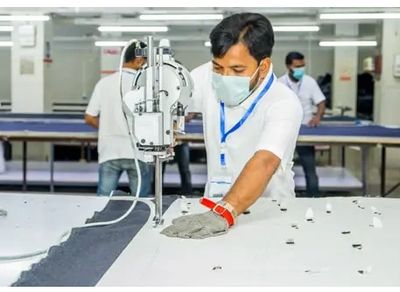
Overview
The cutting quality procedure in the garment industry ensures that cut fabric parts accurately match patterns, which is essential for preventing issues in assembly, fit, and final appearance. This process involves comprehensive fabric inspection and marker inspection, focusing on key aspects such as fabric spreading (tension, alignment) and the cutting process (precision, edge quality, notch accuracy). The primary goals include minimizing defects like frayed edges, miscuts, and ply-to-ply fusion, typically achieved through 100% inspection of panels and 10% spot-checks on bundles to uphold garment quality control.
Key Aspects of Cutting Quality Control
Marker inspection is crucial for verifying pattern placement, grain lines, notches, and proper utilization to avoid misaligned or mismatched panels. During fabric inspection, which is an essential part of the garment quality control process, we monitor tension, edge alignment, pattern matching (especially for checks and stripes), and any fabric defects before cutting. The cutting quality procedure involves checking for accurate knife usage, ensuring sharp cutting to prevent ragged edges, verifying proper notch placement, and confirming correct drill marks. In the component inspection, also known as bundle check, we ensure all pieces are present, accurately numbered, and shaded properly to prevent the mixing of fabric lots. Effective defect management includes identifying and rectifying common issues such as miscuts (with a tolerance of approximately 1/16 inch), ragged edges, or ply-to-ply fusion.
Objective
Fabric Relaxation:
Relaxing the fabric is a crucial procedure that factories must perform for all types of fabric. Below are the standard times that factories adhere to before cutting the fabric:
1. Stretch fabric – 12 hours
2. Jersey fabric (knit cotton) – 24 hours
3. 1x1 Rib fabric – 12 hours
4. Rigid fabric – Laid but allowing 4 hours for relaxation before cutting.
Spreading:
While spreading is often not regarded as a vital operation in garment quality control and is typically executed manually without the supervision of the cutting master, it serves as a critical checkpoint in fabric inspection. Many post-sewing measurement defects in a garment can usually be traced back to incorrect spreading and cutting. During the spreading process, the quality assurance inspector must check the fabric lay for the following defects:
· When using a marker, always compare it with the original pattern.
· Marker making: Ensure all parts of a particular garment appear on the marker, especially smaller parts like collars and cuffs, which should be present in pairs.
· Marker Placement: Confirm that the marker is placed on the spread with the edge parallel to the selvedge of the piece goods, ensuring that all cut pieces will be complete.
· Table Marks: Inspect the table for all table marks, allowing no tolerance for splicing (a minimum of one inch of overlap).
· Markers: Verify that the marker is not creased, damaged, or has overlapping parts.
· Marker Blueprint: Conduct random checks of some measurements in the marker, as sometimes the marker can become distorted while making a blueprint.
· Spread Height: Ensure the height of the spread is at least two inches less than the cutting blade knife. For knits, confirm that the ply height is stable.
· Narrow Goods: After spreading, check the far edges to ensure all piles extend beyond the marker line.
· Tension and Creasing: Ensure there is no artificial or excessive tension due to a very ‘tight’ spread, and randomly check for any creasing of the fabric.
· Leaning: Carefully check that one edge of the fabric is square to the tabletop, visually inspecting the alignment.
· Count: Verify the count after spreading and before cutting, checking all plies at both ends, with no tolerance allowed.
Changes are sometimes made to markers to address production issues; however, such actions should never be taken without consulting Co.'s merchandisers or quality inspectors. If changes to the pattern or marker are necessary, a new pattern and marker should be developed. Changes should never be made on the same marker.
No tolerance should be allowed in spreading or cutting, as defects in these areas can lead to increased issues during sewing. The Spreading Inspector must inform the spreading master and cutting masters of any irregularities and ensure corrective actions are implemented. In cases of re-spreading or marker redevelopment, the Inspector should coordinate with the spreader and inform Co.'s Quality Inspector.
Cutting Checkpoints:
· Miscut: Check for miscuts or failures of the cutter to 'split the line.' Tolerance is +/- 1/16”.
· Matching Plies: Compare the top ply with the bottom ply. Tolerance is +/- 1/8”.
· Ragged Cutting: This is a judgment defect. For specific parts like pockets and collars, ragged cutting can be critical, while for others, such as the front, it may be less severe if the ragged edges are not too pronounced.
· Notches: Check the notch locations by placing the pattern over the top ply. Tolerance is +/- 1/8”.
· Marker Inspection: Compare the marker to the pattern to ensure its correctness.
· Slant Knife: Inspect the top ply and the last for slant knife issues, which occur when the knife blade tilts during cutting, resulting in size discrepancies throughout the ply height.
· Measurement Checks: Tolerance for Straight Knife is 3mm, for Band Knife is 2mm, and for dye-cuts is 1mm.
The Quality Inspector should assess fabric wastage during cutting, aiming to minimize end bits and maintain a remnants register for each roll. This practice not only aids in garment quality control but also allows for easy replacement of parts from the same rolls to avoid color shading and ensures maximum fabric utilization.
Numbering and Bundling:
Objectives:
· To ensure all parts of the garment have the same numbering.
· To increase productivity.
· To avoid shading in the garment.
The quality control inspector should conduct a thorough fabric inspection as part of the garment quality control process to check for the:
· Sequence of numbering of all parts of the garment.
· Numbering should be done as per the markings on the marker to ensure that all garment parts have the same numbers.
· Bundles must be checked for the sequence of numbers, missing pieces, bundle numbers, quantities, etc.
Inspection Guidelines:
· Always try to inspect without disturbing the cut block. This is essential in case the particular piece needs to be re-cut as part of the cutting quality procedure.
· Do not disturb the order of the cut pieces, as they have not yet been numbered.
· Sometimes manufacturers, in an effort to save time, delegate the decision of re-cutting from the cutting room to 'trimming' or 'snipping' in the sewing room. Such practices lead to added costs in the sewing room for trimming each piece, compared to cutting in bulk in the cutting room.