leather products
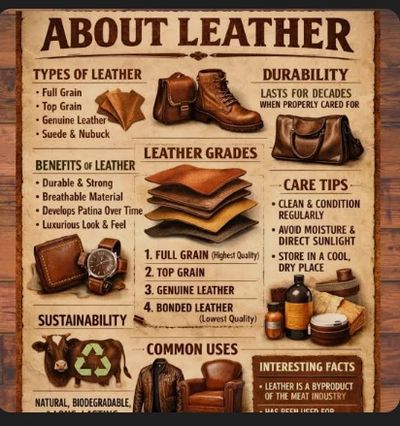
Overview
Leather products range from premium full-grain and top-grain (durable, natural) to genuine, split, and bonded leather (lower durability, processed). The garment industry ensures quality through rigorous inspection of raw hides, consistent stitching, and finishing checks. Key quality steps include material testing, physical, chemical, and final inspection.
Leather apparel (jackets, pants, skirts) and accessories (bags, wallets, belts, shoes) are primarily made from high-quality full-grain or top-grain leather, as well as suede, nubuck, and Nappa. Quality control focuses on examining raw hide grade, tanning consistency, color fastness, stitching strength, and hardware durability to ensure longevity, softness, and defect-free finishes.
Types of Leather Apparels & Accessories Products
- Apparel: Leather jackets, trousers/pants, skirts, vests, and blazers are popular, often using supple, lighter-weight hides for comfort.
- Accessories:
- Bags: Handbags, briefcases, backpacks, and luggage often use durable, top-grain leather.
- Small Leather Goods (SLGs): Wallets, purses, pouches, passport holders, and card holders.
- Belts: Ranging from casual to formal, often using full-grain leather for strength.
- Footwear: Shoes, boots, and sandals, commonly made from suede or durable hides.
- Others: Gloves, watch bands, and clothing accents.
Leather Grades:
- Full-grain: Highest quality, durable, develops a patina over time; ideal for luxury goods.
- Top-grain: Sanded to remove imperfections, more flexible, and commonly used for high-end fashion.
- Genuine/Split: Cost-effective, less durable, used for daily wear items.
- Specialty Leathers: Nappa leather (soft, chrome-tanned), Suede (brushed, fuzzy texture), and Patent leather (glossy finish).
Types of Leather Products (By Quality/Durability)
- Full-Grain Leather: Highest quality, uses the natural, untouched top layer of the hide; very durable, develops patina.
- Top-Grain Leather: Top layer is sanded/buffed to remove imperfections, resulting in a more uniform but slightly less durable surface than full-grain.
- Genuine Leather: Made from lower-quality layers, usually buffed or treated; more affordable but less durable, prone to peeling.
- Split Leather: Derived from the inner layer of the hide, often used for suede; softer but weaker.
- Bonded Leather: Lowest quality, created from shredded leather scraps mixed with glue/plastic.
- Specialty Types: Nubuck (top-grain buffed to a velvet finish) and Patent leather.
Quality Control Procedures in the Leather Garment Industry
Quality assurance is critical across the production lifecycle to meet industry standards :
- Raw Material Inspection (Pre-production): Inspecting raw hides for scars, insect bites, or defects. Testing for moisture, odor, and color consistency.
- Cutting Process Control: Selecting the right parts of the hide for specific garment sections and ensuring proper alignment.
- Assembly and Stitching: Monitoring needle types, thread tension, and seam density.
- In-line & Final Inspection (Post-production):
- Physical Tests: Checking tensile strength, tear strength, and abrasion resistance.
- Garment Check: Measuring dimensions against specifications, ensuring color consistency, and inspecting accessories (zippers, buttons).
- Chemical Tests: Ensuring safety compliance regarding chemicals, such as chrome-VI limitations.
5. Final Audit: Random sampling of finished products to accept or reject based on acceptable quality levels (AQL).
Common Defects Checked: Scars, scratches, color variations, uneven grain, and weak stitches.